
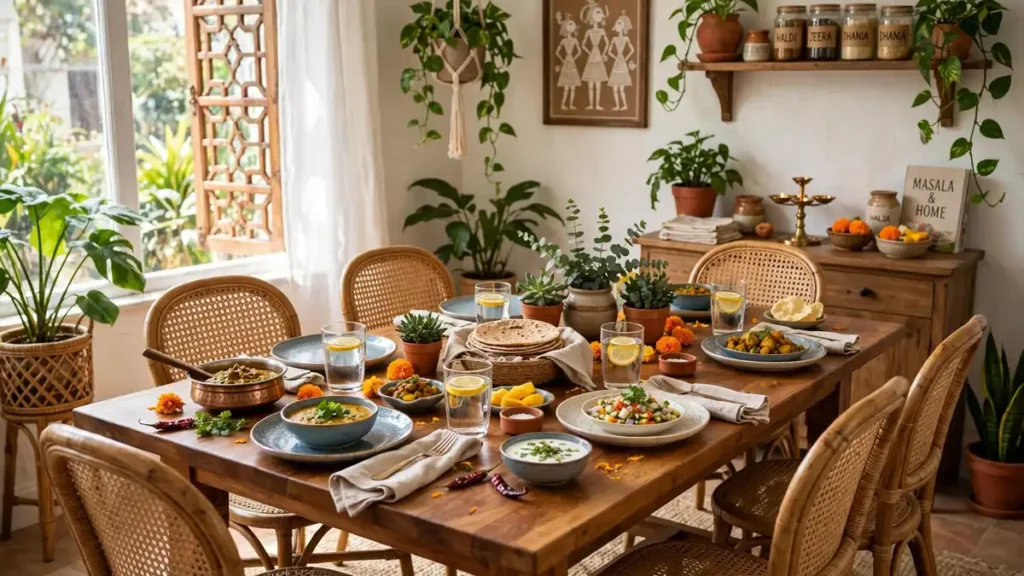
A dining table is one of the most used pieces of furniture in an Indian home. It hosts daily meals, homework, festival dinners, tea with guests and long family conversations, often all in the same day. Choosing the right dining table is about room size, seating needs, shape, material and how easy it is to clean after a meal. A table that looks beautiful in a showroom can feel cramped at home if it leaves no room to pull out a chair or walk past with a plate in hand.
Answer: Which Dining Table Suits an Indian Home?
For most Indian homes, a rectangular wooden dining table for six suits a regular dining room, while a round dining table suits a small flat. Measure the room first, leave enough space to pull out every chair, and choose a material that handles hot vessels, spills and daily wiping without staining.
What Are the Main Dining Table Shapes?
A rectangular dining table is the most common shape in Indian homes because it fits against a wall or in the centre of a rectangular dining room. It seats people in two rows, leaves room for serving dishes in the middle, and pairs well with a bench on one side for extra seating during festivals. Its straight edges also make it easy to push against a wall when floor space is needed.
A round dining table suits small flats and square dining corners because it has no sharp corners and every seat faces the centre. Conversation flows easily around a round table, and it works well for four people. A round table for six needs a larger diameter, so it can take up more floor space than expected once chairs are pulled out.
A square dining table suits a square room and a small family of four, with two seats on each side or one seat per side. It feels balanced and compact, but it seats fewer people than a rectangular table of the same length. An extendable dining table has leaves or panels that fold out when guests arrive, so a table for four becomes a table for six or eight on festival days and folds back for daily use.
The history and forms of the dining table explains how these shapes developed for different rooms and gatherings, and the construction of tables explains how legs, aprons and tops carry weight and stay stable over years of use.
Which Dining Table Material Lasts Longest?
Solid wood, such as teak, sheesham or mango wood, is the most durable dining table material for Indian homes. It handles hot vessels, resists dents better than soft materials, and can be polished or refinished after years of use. Solid wood costs more at the start, but a well-made wooden table often serves a family for decades and suits both daily meals and festival gatherings.
Engineered wood, such as MDF or plywood with a veneer finish, costs less and offers many colours and finishes. It suits a home that wants a modern look on a tighter budget, but it needs more care with water: spills left standing can swell the edges, and a damaged veneer is harder to repair than solid wood. A glass-top dining table looks light and modern and wipes clean easily, but it shows every fingerprint and smear, and it needs a sturdy base so the top does not wobble.
A marble-top dining table looks grand and stays cool in summer, which suits a formal dining room. Marble is heavy, so the base must be strong, and it stains from turmeric, oil and acidic spills if they are not wiped quickly. Metal-frame tables with a wood or glass top suit a contemporary home and handle daily use well, though metal legs can scratch tile floors unless they have protective pads.
What Dining Table Size Suits 4, 6 or 8 People?
Seating comfort depends on elbow room as much as table length. Each person needs enough width to sit, eat and move an arm without bumping a neighbour. A dining table for four usually measures around four feet in length for a rectangular shape, while a table for six needs around five to six feet so serving dishes still fit in the middle. A table for eight needs a longer room and a wider table, or an extendable model that grows only when guests arrive.
Room clearance matters more than table size alone. Leave enough space behind every chair so a person can stand up and walk past without squeezing, and keep a clear path from the kitchen to the table for serving. In a small flat, a round table for four or a rectangular table with a bench often seats more people in less space than a large rectangular table with six separate chairs. When the dining area opens into the living room, living room layouts that open into a dining corner help place the table where it does not block the main walking path.
Which Shape Suits a Small Flat and Which Suits a Large Room?
A small flat suits a round table for four, a square table for four, or a wall-mounted folding table that drops down for meals and folds away after. A bench on one side saves the space that separate chairs need for pulling out, and a light-coloured top makes a small dining corner feel less crowded. Avoid a heavy marble top in a small flat, because its weight and bulk dominate the room.
A large dining room suits a rectangular table for six or eight, with space for a sideboard or crockery unit along the wall. A long table also suits festival meals where many dishes are served at once, because the centre stays clear for bowls and platters. In a large open-plan home, a rug under the table marks the dining zone and protects the floor from chair movement, as long as the rug is large enough for chairs to stay on it when pulled out.
How Do You Clean a Dining Table by Material?
A wooden dining table should be wiped with a soft, slightly damp cloth after meals and dried at once, because standing water dulls polish and swells engineered wood edges. Hot vessels should sit on a trivet or mat, not directly on the polish, and turmeric or oil spills should be wiped immediately so they do not stain. A light polish every few months keeps the finish even, and deep scratches on solid wood can be sanded and refinished by a carpenter.
A glass top should be wiped with a soft cloth and a mild glass cleaner, avoiding abrasive pads that scratch the surface. A marble top needs the most care: wipe spills at once, avoid acidic cleaners, and use coasters under glasses and mats under hot dishes. A metal frame should be wiped dry after cleaning so moisture does not mark joints, and felt pads under legs protect tile and wooden floors from scratches.
Daily habits matter more than deep cleaning. Clearing the table after every meal, keeping a washable table mat or runner in place, and storing serving dishes nearby all reduce stains and clutter. In a home where the dining area sits close to the kitchen, kitchen layouts that sit beside a dining table shorten the serving path and keep hot dishes from travelling across the living room.
How Do You Style a Dining Table for Daily Use and Festivals?
For daily use, keep the table surface mostly clear with just a simple runner, a small plant or a fruit bowl, so meals, homework and tea all fit without moving a display each time. Chairs should match in height and comfort, because a beautiful chair that no one wants to sit on for a full meal fails at its main job. A mix of chairs and a bench suits families with children, since a bench seats three children where two chairs would fit.
For festivals, add a tablecloth or a bright runner, fresh flowers, and extra seating from the living room or an extendable leaf. Keep serving dishes in the centre and water glasses at each place, and leave one end of the table clear for serving so guests do not have to pass heavy dishes across the whole table. After the festival, fold the extendable leaf back and return extra chairs, so the dining corner goes back to its daily size.
A dining corner also benefits from the rest of the home working with it. When a home is planned with the dining space in mind, a home planned with a shared dining space places the dining area near the kitchen and away from the main entrance, and interior choices for a dining corner show how lighting above the table changes the feel of every meal. For a home on a tighter budget, decorating a dining corner without overspending shows how a runner, plants and warm lighting refresh a table without replacing it.
What Mistakes Should You Avoid When Choosing a Dining Table?
Choosing a table by showroom looks alone is the most common mistake, because a table that seats eight in a large showroom can overwhelm a small dining room at home. Ignoring chair pull-out space is another: a table that fits the room on paper still fails if chairs cannot be pulled out or if the walkway behind them disappears. Choosing a delicate material for a home with small children also backfires, because daily spills and knocks need a surface that forgives them.
Measure the room, mark the table outline on the floor with tape, and sit on a chair in that marked space before deciding. Check that the table height matches chair height so elbows rest comfortably, and check that the base or legs do not block legroom at the ends. A dining table chosen this way serves daily meals comfortably and still rises to festival occasions.
Key Takeaways
- Measure the room and chair pull-out space first; a rectangular table for six suits most regular dining rooms.
- A round table suits small flats and easy conversation, while an extendable table covers festival seating.
- Solid wood lasts longest and can be refinished; engineered wood costs less but needs care with water.
- Glass wipes clean but shows smears; marble looks grand but stains from turmeric and oil if spills sit.
- Leave a clear serving path from kitchen to table and keep one end clear during large meals.
- Wipe spills at once, use trivets under hot vessels, and fit felt pads under metal legs.
FAQs
What size dining table is best for 6 people?
A rectangular dining table for six usually needs around five to six feet in length so each person has elbow room and serving dishes still fit in the middle, with enough clearance behind every chair to stand up comfortably.
Is a round or rectangular dining table better for a small flat?
A round dining table is better for a small flat because it has no sharp corners, fits into a square corner, and lets four people talk easily, while a rectangular table with a bench is the better choice if the room is narrow and long.
Which dining table material is easiest to clean?
A glass-top dining table is easiest to wipe clean after meals, while solid wood is the easiest durable choice because it handles hot vessels and daily wiping well and can be polished again after years of use.
How do I protect a wooden dining table from stains?
A wooden dining table is protected from stains by wiping spills at once, using trivets under hot vessels, keeping a washable runner in place, and polishing the finish every few months so the surface stays sealed.
Can a dining table for 4 seat 6 people for a festival?
A dining table for four can seat six people for a festival if it is an extendable model with fold-out leaves, or by adding a bench on one side and keeping serving dishes in the centre so every seat still has elbow room.