
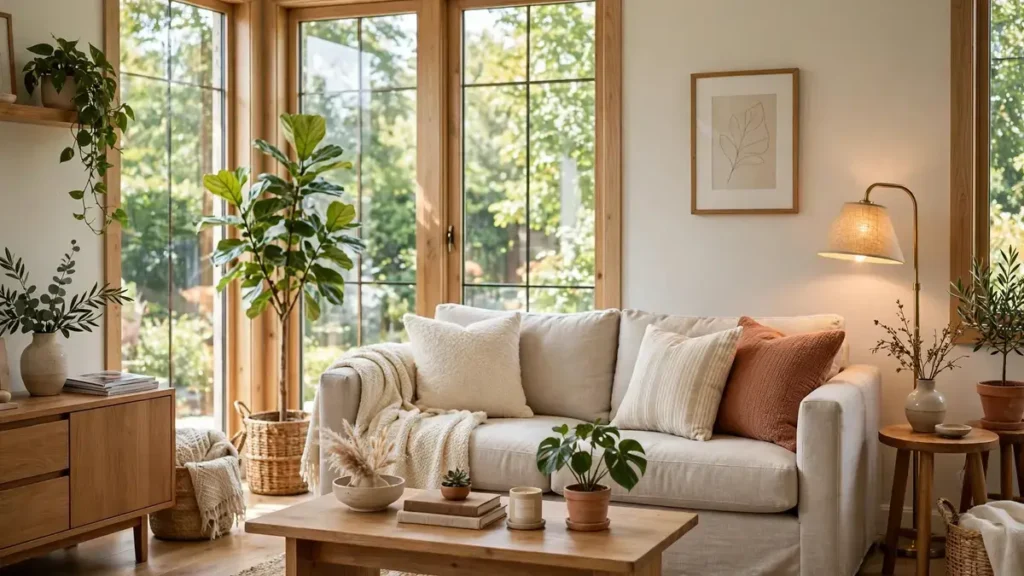
Walking into a home that feels calm and welcoming is rarely an accident. The rooms may look simple, yet every choice — the colour on the wall, the height of a lamp, the place where shoes land by the door — has been thought through. Interior design is that thinking made visible. It is not about filling a room with expensive pieces or copying a photograph. It is about shaping a space around the people who live in it, so daily life feels easier and the home feels like its own.
Answer: What Makes Interior Design Work?
Good interior design starts with how a room is used, then chooses layout, colour, light and furniture to support that use. It keeps movement easy, gives every item a sensible place, balances colour and texture, and layers light so a room works in daylight and in the evening.
What Is Interior Design, Really?
Interior design is the planning of indoor spaces for both comfort and appearance. A designer looks at the shape of a room, the position of doors and windows, the amount of daylight, and the way people move through the space. From there, choices follow: where the sofa sits, which wall carries the television, how much storage a room needs, and which colours will make the room feel larger or cosier.
This is different from decoration alone. Decoration adds cushions, art and accessories to a finished room. Interior design starts earlier, with the structure of the space itself. A room with a poor layout will still feel awkward after new cushions arrive, while a well-planned room can look good with modest furniture. The Britannica overview of interior design as a discipline describes the field as a blend of architecture, art and practical planning, and that blend is exactly what shows up in a home that works well.
How Do You Plan a Room Before Choosing Furniture?
Start by watching the room for a few days. Notice where sunlight falls in the morning and where shadows gather in the evening. Notice the path people naturally take from the door to the kitchen, and which corners stay unused. These observations matter more than any shopping list, because they reveal what the room already does well and where it struggles.
Next, name one main job for the room. A living room may need to host family evenings and occasional guests. A bedroom needs rest first, with reading and dressing as secondary jobs. Once the main job is clear, place the largest piece first — the sofa in a living room, the bed in a bedroom — and let smaller pieces follow around it. This is also the stage to think about planning a whole house from the start, because a room that connects well with its neighbours feels larger than a room planned in isolation.
Measure before ordering anything. A sofa that looks right in a showroom can overwhelm a small room, and a rug that is too small makes furniture look scattered. Leave at least enough space to walk around the main pieces without turning sideways. In a tight room, furniture with visible legs and a lighter frame keeps the floor visible, which helps the room feel open.
Which Colours Work Best in Interior Design?
Colour sets the mood of a room faster than any other choice. Warm neutrals — cream, soft beige, warm grey — create a calm base that suits most furniture and most seasons. Deeper colours, such as forest green, navy or terracotta, work well on a single wall or in a smaller room where a cosy feeling is welcome. In Indian homes, these deeper tones also pair beautifully with wood, brass and handloom textiles.
A simple rule keeps colour choices safe: one main neutral for walls and large pieces, one supporting colour for curtains and rugs, and one accent colour for cushions and art. When the accent colour repeats in at least three places, the room looks intentional rather than random. Paint samples on the actual wall, and look at them in morning light and evening light, because the same shade can look quite different at different hours.
For modern living room layouts, many designers keep walls light and add colour through furniture and art, which makes it easy to change the look later without repainting. For bedrooms, softer and cooler tones often suit rest better, while a kitchen that opens into the living area benefits from colours that tie the two spaces together, as in a kitchen that opens into the living room.
How Does Light Change a Room?
Light is the most powerful tool in interior design, and much of it costs nothing. Sheer curtains soften harsh sunlight while keeping a room bright. Mirrors placed opposite a window bounce daylight deeper into a room. Light wall colours reflect light, while dark colours absorb it, which is why a small room often feels larger in pale tones.
In the evening, one bright ceiling light rarely flatters a room. Layered light works better: a ceiling light for general brightness, table or floor lamps for reading and conversation, and a small warm light for a cosy corner. Dimmers, where possible, let one room serve both a lively family evening and a quiet night. In a bedroom, warm-toned bulbs near the bed support winding down, while a brighter light near a wardrobe or dressing table helps with practical tasks.
What About Small Room Interior Design?
Small rooms reward careful choices. Multi-use furniture earns its place: a bench with storage inside, a dining table that folds against a wall, a bed with drawers underneath. Vertical space matters too. Shelves that rise toward the ceiling draw the eye upward and keep the floor clear. A single large mirror, rather than several small ones, opens a room visually without clutter.
Colour and pattern also need restraint in small spaces. One strong pattern — on a rug or a curtain — with plain pieces around it keeps the room lively without feeling busy. This same thinking shapes small bedroom layouts that feel larger, where storage near the bed and light colours do most of the work.
How Do You Add Personality Without Clutter?
A home should show who lives in it. Family photographs, books, a handmade textile or a plant collection all add character. The trick is grouping: a small collection displayed together on one shelf reads as a feature, while the same items scattered across every surface read as clutter. Leave some empty space on shelves and tables. Empty space is not wasted; it lets the eye rest and makes the items that remain stand out.
Texture adds warmth without adding objects. A woollen throw, a cotton curtain, a wooden tray and a ceramic vase each feel different to touch, and together they keep a neutral room from feeling flat. Plants are another easy layer. A money plant on a shelf, a snake plant in a corner, or herbs on a kitchen windowsill bring life and colour, and they suit almost every style from modern to traditional.
Which Mistakes Should You Avoid?
One common mistake is matching everything perfectly. A room where every piece comes from one set can feel like a showroom rather than a home. Mixing one or two styles — a modern sofa with a wooden vintage side table, for instance — usually feels more lived-in and personal.
Another mistake is pushing all furniture against the walls. Pulling a sofa even a few inches away from the wall, with a narrow console or a lamp behind it, can make a room feel more arranged. Hanging art too high is another frequent error: the centre of a picture usually sits at eye level when standing, and a gallery wall should feel like one group rather than scattered frames.
Finally, avoid copying a room exactly from a photograph. Photographs are styled for a camera, with perfect light and no daily clutter. Real homes hold school bags, charging cables and laundry baskets. The Houzz photo collections of real interiors are useful for ideas, but the best rooms borrow an idea — a colour pair, a layout, a lamp style — and adapt it to real life.
How Can Interior Design Stay Affordable?
Good design does not depend on a large budget. Paint is the most affordable transformation available: one accent wall can change a whole room. Rearranging furniture costs nothing and often reveals a better layout. Second-hand wooden furniture, reupholstered in a plain fabric, can outlast many new pieces. Curtains, cushions and rugs can refresh a room seasonally without replacing large items.
For a careful approach, see decorating a home without overspending, which focuses on small changes with a large visual effect. Spending where it matters most also helps: a comfortable mattress, a sturdy sofa frame and good lighting repay their cost daily, while decorative items can wait.
Key Takeaways
- Plan the layout around how a room is actually used before selecting furniture.
- Use one main neutral, one supporting colour and one repeated accent colour.
- Layer light: general light, task lamps and warm accent light together.
- In small rooms, use vertical storage, visible floor space and one strong pattern.
- Add personality through grouped collections and texture, not scattered objects.
- Paint, rearrangement and textiles refresh a room at a modest cost.
Frequently Asked Questions
What is the first step in interior design?
Start by observing the room: its light, its movement paths and its main job. Place the largest piece of furniture first, measure everything, and choose colours and smaller pieces only after the layout feels right.
How do I choose colours for a living room?
Pick a calm neutral for walls and large furniture, add one supporting colour through curtains or a rug, and repeat one accent colour in cushions and art. Test paint samples in both morning and evening light before deciding.
How can I make a small room look larger?
Use light wall colours, furniture with visible legs, a large mirror opposite a window, and vertical shelving. Keep the floor as clear as possible and limit strong patterns to one feature, such as a rug or curtains.
What is modern interior design?
Modern interior design favours clean lines, uncluttered surfaces, neutral colours and functional furniture. It often uses natural materials such as wood, stone and linen, with a few well-chosen pieces rather than many decorative items.
How much should I spend on interior design?
Spend most on items used daily — a good mattress, a sturdy sofa and proper lighting — and less on decorative pieces that can be added over time. Paint, rearranged furniture and new textiles can transform a room at a modest cost.