
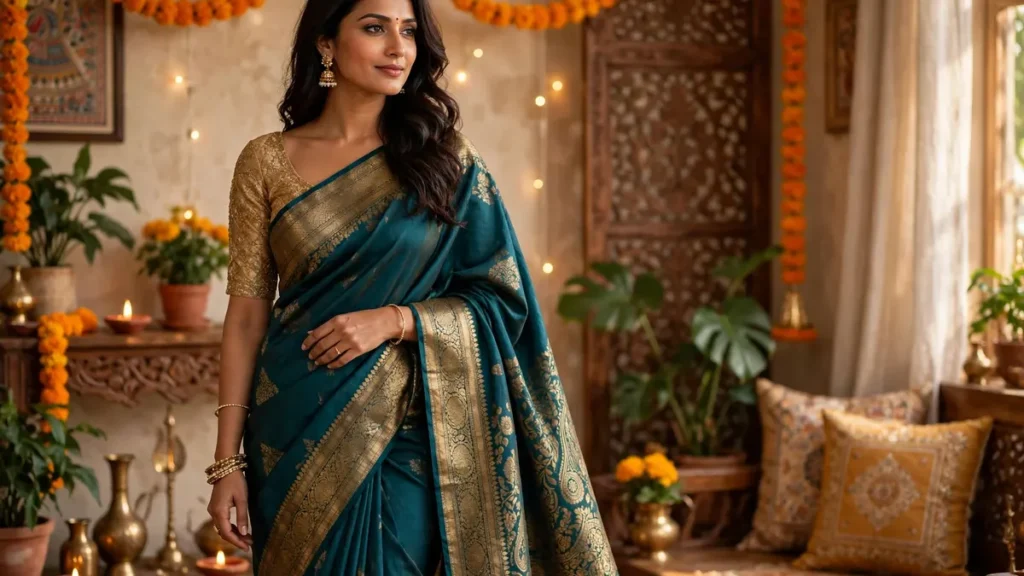
A saree has dressed Indian women for centuries, and it still stops a room today. One length of fabric, draped with care, can look regal at a wedding, graceful at a festival, and quietly elegant at work. No other outfit changes so completely with fabric, colour and drape: the same woman can look entirely different in a heavy silk saree and a light cotton one. Choosing well is less about following every trend and more about knowing which fabric suits the occasion, which drape suits your comfort, and which colour flatters you.
Answer: How Do You Choose the Right Saree?
Choose a silk saree for weddings and grand occasions, a cotton saree for daily wear and warm weather, and a georgette or chiffon saree for parties and long evenings. Match the drape to your comfort, the blouse to the neckline you like, and the colour to the occasion and your skin tone.
What Is a Saree?
A saree is a long piece of unstitched fabric, usually between five and nine yards, draped around the body over a fitted blouse and a petticoat. The pleats fall at the waist, the pallu — the decorated end of the fabric — falls over the shoulder, and the rest of the drape shapes the silhouette. Because the fabric is unstitched, one saree can be draped in many ways, and regional styles across India each add their own pleating and pallu traditions.
The history of the sari traces the garment back thousands of years, and the Britannica entry on the sari notes its place as a principal garment for women in India. That long history is part of its appeal: wearing a saree connects a modern occasion with a tradition that has never really left fashion.
Which Saree Fabric Suits Which Occasion?
Fabric decides how a saree falls, how heavy it feels, and how long you can wear it comfortably. Silk is the classic choice for weddings and formal celebrations. Kanjeevaram silk from Tamil Nadu, with its rich borders and temple motifs, and Banarasi silk from Varanasi, with its fine zari work, both carry a weight and shine that suit grand occasions. A silk saree holds its shape beautifully in photographs, though it needs care in storage and draping.
Cotton is the everyday hero. A cotton saree breathes in warm weather, drapes neatly for work, and suits daily wear, college, and casual gatherings. Handloom cottons from West Bengal, Odisha and Andhra Pradesh add texture and craft without formality. Linen blends offer a similar ease with a slightly crisper fall, good for daytime events.
Georgette and chiffon sit between the two. They are light, flowy and forgiving to drape, which makes them popular for parties, receptions and long evenings where dancing is likely. They also suit younger wearers and anyone new to draping, because the fabric settles softly and pleats stay manageable. Organza, with its sheer stiffness, creates a structured, modern silhouette for festive evenings, while velvet borders and embellished nets suit winter weddings.
How Do You Drape a Saree?
Draping starts with a well-fitted petticoat, tied firmly at the waist, and a blouse that fits without pulling. The most common style, the Nivi drape, tucks one end at the waist, wraps the fabric around once, forms pleats at the front, and brings the pallu over the left shoulder. Pleats should face left, sit evenly, and fall just above the feet. The pallu can fall open for a formal look or be pleated neatly for a tidy, work-ready finish.
Other regional drapes change the character entirely. The Bengali drape brings the pallu from under the right arm and over the left shoulder with a key bunch. The Gujarati drape, also called the seedha pallu, brings the pallu from the back over the right shoulder to the front, showing off the pallu design — a lovely choice for weddings. The Maharashtrian nauvari drape, worn with a nine-yard saree, resembles a dhoti style and allows great ease of movement. Trying a new drape at home before the event, with the actual blouse and footwear, avoids last-minute stress.
Comfort matters as much as style. Pin the pallu at the shoulder so it stays in place while you move, and pin pleats at the waist if the fabric slips. Wear the footwear you plan for the event while draping, because heel height changes where the saree hem falls. A saree that feels secure lets you enjoy the occasion instead of adjusting the drape all evening.
Which Saree Colours Flatter You?
Colour choice depends on occasion, season and skin tone. Red remains the classic bridal colour across much of India, symbolising celebration, while maroon, magenta and deep pink suit weddings and festive evenings. Pastels — blush pink, mint green, powder blue and lavender — suit daytime weddings, summer events and younger wearers. Jewel tones such as emerald, royal blue and wine flatter most skin tones in evening light.
For warm skin tones, earthy colours such as mustard, terracotta, olive and warm gold often look radiant. For cooler skin tones, jewel tones and cool pastels such as icy blue, emerald and berry shades usually shine. These are starting points, not rules: the best test is holding the fabric near your face in natural light and noticing whether your skin looks brighter or duller beside it.
Season also plays a part. Light, bright colours suit summer days, while deeper, richer colours suit winter evenings. A festive home, dressed with rangoli patterns at the doorway, calls for a saree colour that stands out against the celebration without clashing with it.
What Makes a Saree Look Modern?
A saree looks modern when the styling is intentional. A belt draped over the waist can give a contemporary silhouette to a plain saree. A sleeveless or halter blouse updates a traditional silk saree for a reception. Sneakers or block heels, chosen with care, make a saree practical for a long day without losing elegance. Minimal jewellery — one statement earring or a single bangle stack — often suits a heavily embellished saree better than a full set.
The blouse shapes the whole look. A well-fitted blouse in a contrasting colour can refresh an old saree entirely, which is why saree blouse styles that change the whole look matter so much. Boat necks suit broad shoulders, sweetheart necklines suit a softer look, and elbow-length sleeves add grace for formal occasions. The same neckline thinking appears in kurti neckline shapes, where a small change in cut changes the whole outfit.
How Do You Style a Saree for a Wedding?
For a wedding, start with the role you play. A bride usually chooses silk with rich zari work, a colour with traditional meaning for her family, and jewellery that matches the saree border. A close family member might choose a silk or embellished georgette saree in a festive colour, with a statement blouse. A guest can choose a lighter embellished saree that photographs well without overshadowing the bride.
Pair the saree with jewellery in one metal tone — gold with warm colours, silver or diamond tones with cool colours — and keep the handbag small. A potli bag in a matching shade completes the look. Hair can be tied in a low bun with fresh flowers for a traditional feel, or left in soft waves for a modern reception. Makeup should match the occasion: a bold lip for an evening wedding, softer tones for a daytime ceremony.
Festive styling extends beyond the saree itself. Hands dressed with henna patterns for festive hands complete a wedding look, while for a quieter family gathering, simple henna for everyday wear keeps the elegance without the elaborate detail.
How Do You Care for a Saree?
Silk sarees should be dry-cleaned and stored in muslin cloth, away from direct sunlight and moisture, with the folds changed occasionally so creases do not set permanently. Cotton sarees can be hand-washed or machine-washed on a gentle cycle, then dried in shade to protect colour. Georgette and chiffon sarees usually need gentle hand washing and should not be wrung hard.
Never hang a heavy silk saree for long periods, as the weight can stretch the fabric. Fold embellished sarees with tissue paper between the folds to protect zari work. Keep naphthalene or cedar away from direct contact with silk, and air sarees occasionally in shade. A little care keeps a good saree beautiful for decades, and many become family pieces passed between generations.
Key Takeaways
- Silk suits weddings and grand occasions, cotton suits daily wear, georgette and chiffon suit parties.
- A well-fitted petticoat and blouse are the foundation of a good drape.
- Test saree colours against your face in natural light before deciding.
- The blouse and pallu styling can modernise even a traditional saree.
- Match jewellery metal to the saree colour tone, and keep one focal piece.
- Store silk in muslin, change folds occasionally, and dry-clean embellished pieces.
Frequently Asked Questions
How do I drape a saree for the first time?
Start with the Nivi drape: tuck one end at the waist, wrap the fabric around once, make even pleats facing left at the front, and bring the pallu over your left shoulder. Practise at home with your blouse and footwear, and pin the pallu at the shoulder for security.
Which saree fabric is best for summer?
Cotton is best for summer daily wear because it breathes and drapes neatly in warm weather. Light georgette and chiffon also suit summer evenings, while silk is better saved for formal occasions despite the heat.
What is the difference between a silk and a Banarasi saree?
Banarasi is a type of silk saree, woven in Varanasi with fine zari work in gold and silver threads. All Banarasi sarees are silk, but not all silk sarees are Banarasi — Kanjeevaram and Mysore silks are other distinct silk traditions.
How do I choose a saree colour for my skin tone?
Warm skin tones often suit mustard, terracotta and warm gold, while cooler skin tones often suit emerald, royal blue and berry shades. Hold the fabric near your face in natural light: the right colour makes your skin look brighter.
Can I wear a saree to work?
Yes, a cotton or light handloom saree with a neat, pleated pallu and a comfortable blouse works well for office wear. Choose muted colours, minimal jewellery and comfortable footwear for a full working day.