
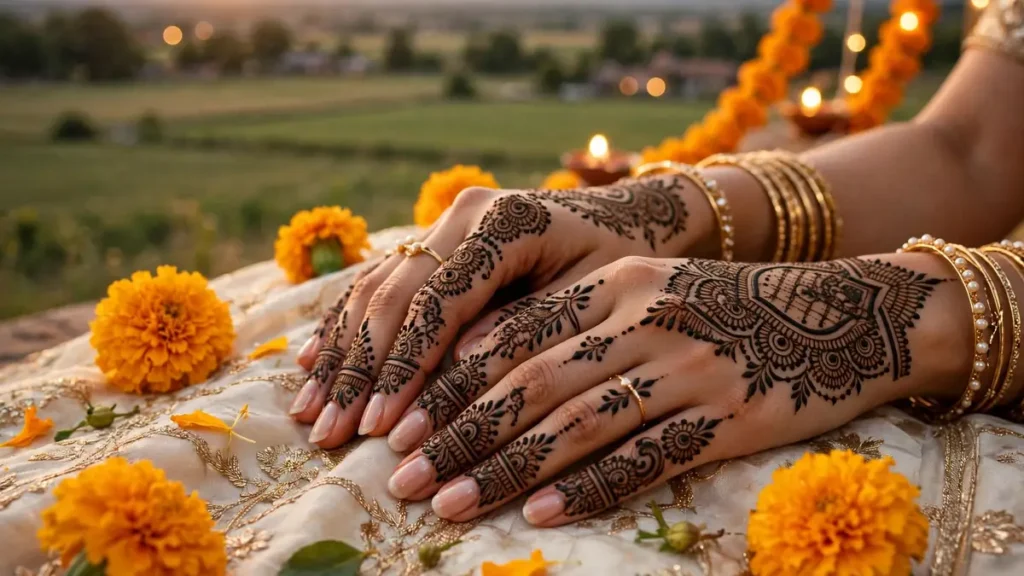
The most loved mehndi designs in India right now blend classic paisleys and peacocks with clean Arabic trails and minimal modern motifs. Brides choose dense full-hand patterns, while festive looks favour simple front-hand and back-hand designs that take 15 to 30 minutes to apply and still photograph beautifully.
Key Takeaways
- Arabic mehndi designs are the fastest-growing style for festivals because they use bold outlines with open spaces.
- A simple mehndi design for the front hand usually needs only a centre motif, finger detailing and a wrist band.
- Bridal mehndi designs cover both sides of the hands up to the elbows and often include the bride and groom figures.
- Natural henna paste left on the skin for 6 to 8 hours gives the deepest maroon stain.
- Lemon-sugar syrup dabbed on drying henna helps the paste stay moist and darkens the final colour.
What Are the Most Popular Mehndi Designs in 2026?
The most popular mehndi designs this year fall into five clear families: traditional Indian, Arabic, Moroccan, Indo-Arabic fusion and minimal modern. Traditional Indian patterns fill every inch of skin with fine lines, paisleys, lotus flowers and peacocks. Arabic designs use thicker outlines, diagonal trails and shaded flowers with deliberate empty gaps, which makes them quicker to draw and easier for first-time artists to copy.
Fusion patterns mix both ideas, pairing an Indian centre motif with Arabic-style finger trails. Minimal designs reduce everything to one mandala, a thin bracelet band or a single chain of leaves along one finger, a style widely shared on social media during the wedding season. the evolution of Indian fashion
Which Simple Mehndi Design Works Best for the Front Hand?
A simple front-hand design works best when it is built in three layers: one strong centre motif on the palm, light detailing on each finger and a finishing band at the wrist. A round mandala or a single lotus in the centre keeps the pattern balanced even if the surrounding lines are basic.
For festivals like Eid, Rakhi and Teej, small checks, dots and leaf chains around the main motif complete the look in minutes. Front-hand patterns are also the easiest to practise, because the palm stays flat and visible while you draw.
What Does a Bridal Mehndi Design Include?
A bridal mehndi design is the most detailed of all mehndi designs. It normally covers the front and back of both hands, extends to the elbows, and continues on the feet up to the ankles. Classic bridal elements include the dulhan (bride) and dulha (groom) figures, wedding symbols like the kalash and doli, and the groom’s name hidden inside the pattern for the wedding-night game.
Professional bridal application takes 3 to 5 hours depending on density, and most artists recommend applying bridal henna 2 days before the wedding so the stain reaches its darkest shade on the main day. women’s summer fashion trends
How Is an Arabic Mehndi Design Different?
An Arabic mehndi design is recognised by its bold outlines, large flowers and diagonal flow from the wrist to one fingertip. Unlike fully packed Indian patterns, Arabic styles leave large areas of skin empty, so the design looks striking with far fewer lines.
Because the motifs are bigger and the lines thicker, Arabic patterns dry faster and suit last-minute festive plans. They are also the most requested style for guests at weddings, sangeet functions and Eid celebrations.
Which Back Hand Mehndi Design Should You Choose?
Back hand mehndi designs focus on the wrist and fingers, since the back of the hand is what shows in photographs and while greeting guests. Popular options include a bracelet-style band with a hanging chain motif, a single peacock near the thumb, or a net pattern across the centre with floral fingers.
Jewellery-inspired back-hand patterns that mimic a haath phool (hand harness) are trending strongly this season because they pair naturally with rings and bangles. summer outfits for women
How Can You Make Mehndi Colour Darker and Longer Lasting?
You can make the mehndi stain darker by preparing the skin and protecting the paste while it dries. Wash hands with plain soap before application so no cream or oil blocks the dye. Once the paste is dry to the touch, dab it gently with lemon juice mixed with sugar; this keeps the paste moist and in contact with the skin longer.
Keep the paste on for at least 6 hours, or overnight for bridal work. Scrape it off dry instead of washing, then apply mustard oil or a natural balm. Avoid water on the design for the first 12 hours, because the stain keeps oxidising and deepening for 24 to 48 hours after removal.
How Long Does a Mehndi Design Last?
A natural henna design usually lasts 1 to 3 weeks. The colour is darkest around day two and three, then fades gradually as the skin sheds its outer layer. Designs on the palms last longest because palm skin is thicker, while patterns on the back of the hand and arms fade sooner. Frequent washing, swimming and exfoliating scrubs shorten the life of the stain. stylish Instagram bio ideas
Conclusion
Whether you pick a dense bridal pattern, a quick Arabic trail or a minimal mandala, the best mehndi designs are the ones that match your occasion, outfit and time in hand. Start with one strong motif, keep your lines confident, and let the stain develop patiently for that rich maroon finish. quiet luxury fashion style
FAQs
Which mehndi design is best for a first-time wearer?
An Arabic or minimal mandala design is best for a first attempt. The motifs are large, the lines are forgiving, and the pattern is ready in about 15 minutes.
How many hours should henna paste stay on the skin?
Keep the paste on for 6 to 8 hours for a deep stain. Brides often leave it overnight to reach the darkest maroon shade.
Why did my mehndi turn out light orange?
A light stain usually means the paste was removed too early or the skin had cream or oil on it before application. Leave the paste longer and clean the skin plainly beforehand for a deeper result.