
A vacuum cleaner has moved from a luxury appliance to a daily necessity in many Indian homes. Dust from roads, construction, pets and open windows settles on floors, carpets, sofas and curtains every day, and a broom often pushes fine dust into the air instead of removing it. A vacuum cleaner pulls that dust into a sealed container, which keeps rooms cleaner and makes breathing easier, especially for people with dust allergy. Choosing the right vacuum cleaner is about floor type, home size, suction, filter and storage space, not just brand or price.
Answer: Which Vacuum Cleaner Suits an Indian Home?
For most Indian homes, a bagless canister vacuum cleaner with suction and a washable HEPA filter suits mixed marble, tile and carpet floors, while a robot vacuum cleaner suits upkeep in a flat with open floor space and few thresholds. Match the model to your floors and home size first, then check suction power, filter type and dust-container capacity.
What Are the Main Types of Vacuum Cleaners?
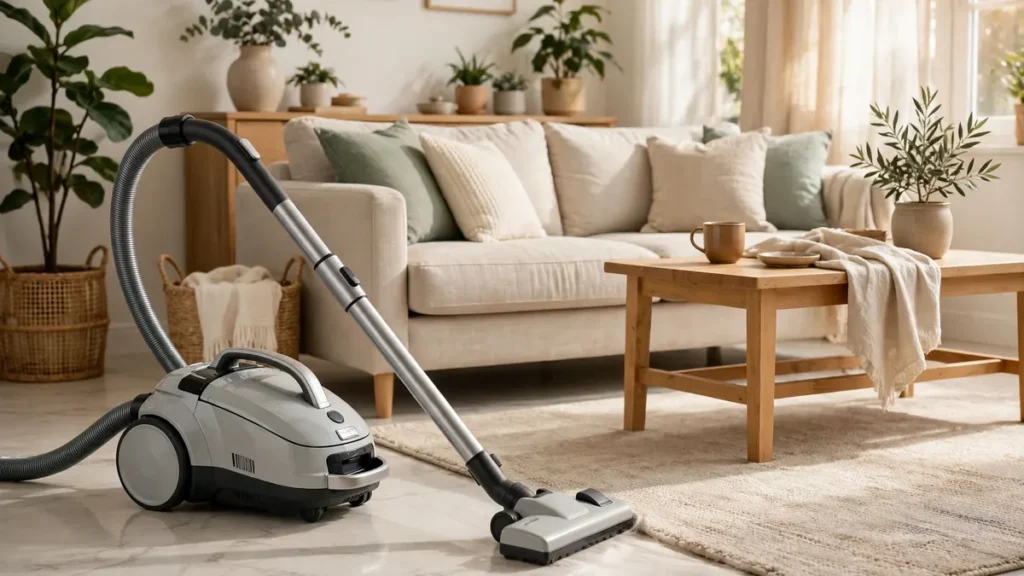
A canister vacuum cleaner has a wheeled body that follows behind the user, connected to a long hose and a floor head. It suits Indian homes with mixed floors because the head can switch between hard floors and low-pile carpets, and the body stays light in the hand. It stores in a cupboard corner, though the hose and attachments need a little space.
An upright vacuum cleaner has the motor and dust container built into one tall unit that the user pushes across the floor. It suits large carpeted rooms because it covers a wide path quickly, but it can feel heavy on stairs and awkward in tight corners. A stick vacuum cleaner is a slim, light version of the upright, often cordless, that suits quick daily cleaning and small flats. It is easy to lift and store, but its dust container is small and its battery limits long cleaning sessions.
A robot vacuum cleaner moves on its own across open floors, following a set path or a mapped route, and returns to a charging dock when its battery runs low. It suits daily dust control in homes with clear floors, but it cannot climb stairs, clean high shelves or handle thick, long-pile rugs well. A wet and dry vacuum cleaner can pick up both dry dust and spilled liquids, which suits homes with pets, small children or frequent spills, though it is larger and heavier than a standard canister model.
The history and working of the vacuum cleaner explains how suction, airflow and filtration combine to lift dust, and the working of a HEPA filter explains why these filters trap very fine particles that ordinary cloth filters let through.
What Does Vacuum Cleaner Suction Power Mean?
Suction power decides how well a vacuum cleaner lifts dust from cracks, carpet fibres and sofa fabric. Manufacturers state it in air watts or in watts of motor power, and the two numbers are not the same. Air watts measure useful cleaning suction at the floor head, while motor watts measure only how much electricity the motor consumes. A model with 300 to 400 air watts cleans most Indian homes well, while a model below 200 air watts may struggle on carpets and thick rugs.
Airflow matters as much as raw suction. A wide floor head with a good seal cleans a hard floor faster than a narrow head with higher suction but poor contact. For carpets, a motorised brush head beats a plain suction head because its rotating brush loosens dust trapped deep in the fibres. For hard floors, a soft brush head or a parquet head protects marble and tiles from scratches while still picking up fine dust along edges and corners.
Which Vacuum Cleaner Suits Each Floor Type?
Marble and tile floors, common across Indian homes, suit a canister or stick vacuum cleaner with a soft brush head and adjustable suction. Lower suction prevents lightweight rugs from being pulled into the head, while a crevice tool reaches the gap between the wall and the skirting board where dust collects. Wooden floors need the same gentle head, because a hard plastic head dragged across wood can leave marks over time.
Low-pile carpets and rugs need a motorised brush head and stronger suction, because dust sinks between fibres where a plain head cannot reach. High-pile or shaggy rugs need even more care: a brush head set too low can tug the fibres, so the height setting should be raised and the suction adjusted. Sofas, mattresses and curtains need an upholstery tool with a fabric strip that lifts lint and pet hair without damaging the material. A small turbo brush, driven by airflow, works well on pet hair on sofas and car seats.
Is a Robot Vacuum Cleaner Worth It for Indian Homes?
A robot vacuum cleaner is worth it when the home has mostly open floors, low thresholds and furniture with enough clearance underneath for the robot to pass. It keeps dust down between deeper weekly cleans, and it can run on a schedule while the family is out. Models with a mop attachment can also wipe hard floors lightly, though they do not replace a proper mop for sticky stains.
It is less useful in homes with many small rugs with tassels, loose cables on the floor, high door thresholds or cluttered rooms, because the robot can get stuck or tangle. Homes with steps between rooms also limit it, since it cleans only one level at a time and must be carried between floors. Before choosing one, measure the clearance under beds and sofas, count the thresholds, and check whether the dustbin is easy to empty, because a small bin fills quickly in a dusty home.
When a home is planned or renovated, planning a home with easy-to-clean floors helps place storage and power points where a vacuum cleaner is actually used, and interior choices for a living room floor show how floor material changes which cleaning head works best.
How Do Filters and Dust Containers Work?
Most modern vacuum cleaners use a bagless dust container that the user empties into a bin and washes occasionally. Bagless models save the recurring cost of bags, but the container and filter must be emptied and cleaned regularly or suction falls. Bagged models keep dust sealed inside a disposable bag, which suits people with strong dust allergy, because emptying a bag releases less dust into the air.
A HEPA filter, short for high-efficiency particulate air filter, traps fine particles including pollen, dust-mite waste and pet dander. A washable HEPA filter can be rinsed and dried, while a non-washable one must be replaced when it clogs, usually every six to twelve months depending on use. A clogged filter is the most common reason a vacuum cleaner loses suction, so checking the filter is the first step when cleaning feels weaker than usual. Never run a vacuum cleaner with a wet filter, because trapped moisture breeds smell and can damage the motor.
For the wider home, the same tidy approach pays off elsewhere: a tidy system for the whole home keeps cleaning tools in one place, and living room layouts that stay tidy under daily use reduce the corners where dust collects.
How Do You Clean and Maintain a Vacuum Cleaner?
Empty the dust container when it reaches the marked maximum line, not when it is completely full, because an overfull container chokes airflow and strains the motor. Tap the container gently over a bin outdoors or over a large bag, and wash it with plain water only if the manual allows it. Wash a washable filter, let it dry fully for at least 24 hours, and never refit it damp.
Check the brush head every month: cut away hair and thread wrapped around the roller with scissors, taking care not to cut the bristles. Check the hose for blockages by running a long, flexible object through it or by feeling for a loss of suction along its length. Wipe the outer body with a dry cloth, and store attachments together so the crevice tool and upholstery brush are not lost. In a small home, small bedroom layouts that feel larger also show how a slim stick model can stand in a narrow gap instead of needing a full cupboard.
What Mistakes Reduce a Vacuum Cleaner's Life?
Running a vacuum cleaner with a full container, a clogged filter or a blocked hose forces the motor to work harder and shortens its life. Vacuuming up large objects, wet spills with a dry-only model, or sharp debris can tear the hose or damage the fan inside. Pulling the machine by its hose instead of moving the body strains the hose joints, and winding the cord too tightly around the body can crack it over time. A vacuum cleaner that smells, overheats or loses suction suddenly should be switched off and checked for a blockage before it is used again.
A vacuum cleaner is a five-to-ten-year appliance in most homes, so a washable filter, a dust container that is easy to empty, and the right head for the floors in the home matter more over its life than a long list of extra attachments that stay unused in a drawer.
Key Takeaways
- A bagless canister model with a washable HEPA filter suits most Indian homes with mixed marble, tile and carpet floors.
- Judge suction by air watts, not motor watts alone, and look for 300 to 400 air watts for a typical home.
- Use a soft brush head on marble, tile and wood, and a motorised brush head on carpets and rugs.
- A robot vacuum cleaner suits daily upkeep in open, single-level homes but struggles with thresholds, tassels and stairs.
- Empty the dust container at the marked line, wash or replace filters on schedule, and clear hair from the brush roller monthly.
- Never vacuum wet spills with a dry-only model, and never refit a damp filter.
FAQs
What type of vacuum cleaner is best for an Indian home?
A bagless canister vacuum cleaner with strong suction and a washable HEPA filter suits most Indian homes, because it handles marble, tile and low-pile carpet floors and stores easily in a cupboard corner.
Is a robot vacuum cleaner good for daily cleaning?
A robot vacuum cleaner is good for daily dust control in open, single-level homes with clear floors, but it cannot clean stairs, high shelves or thick rugs, so it works best alongside a regular vacuum cleaner for deeper cleaning.
How often should a vacuum cleaner filter be cleaned?
A washable filter should be rinsed every one to two months in a dusty home and dried fully for at least 24 hours before refitting, while a non-washable filter usually needs replacement every six to twelve months.
Why has my vacuum cleaner lost suction?
A vacuum cleaner usually loses suction because the dust container is full, the filter is clogged, the hose is blocked, or hair is wrapped around the brush roller, and checking those four points in order restores most models.
Can a vacuum cleaner clean sofas and curtains?
A vacuum cleaner can clean sofas and curtains with an upholstery tool, using low suction on delicate fabric and a turbo brush for pet hair, as long as the fabric is dry and the tool is kept moving so it does not pull at seams.