
Weekly Planning Routine: A Simple Guide to Organize Your Week
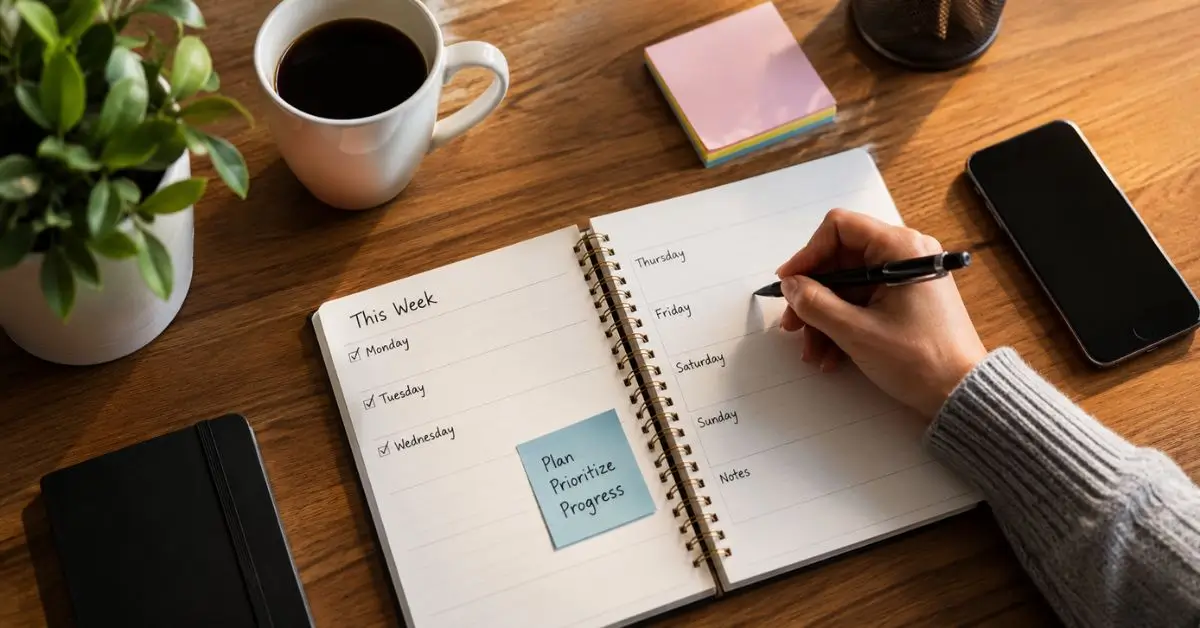
A weekly planning routine is one of the easiest ways to stay organized, reduce stress, and make steady progress toward your goals. Instead of reacting to daily tasks, you start each week with a clear plan.
Whether you’re managing work, school, or personal responsibilities, spending a little time planning can make your entire week more productive.
Why Is a Weekly Planning Routine Important?
Planning your week gives you direction and helps you use your time wisely. It also prevents last-minute stress and forgotten tasks.
Some key benefits include:
- Better time management
- Increased productivity
- Less stress and overwhelm
- Improved work-life balance
- Clear weekly goals
How to Create a Weekly Planning Routine
1. Review the Previous Week
Take five minutes to look back at what you completed and what still needs attention. Learn from any challenges and celebrate your progress.
2. Set Your Top Priorities
Choose three to five important goals for the week. Focusing on a few priorities keeps your schedule realistic.
3. Schedule Important Tasks
Add meetings, appointments, deadlines, and personal commitments to your calendar first. Then schedule focused work sessions.
4. Plan Your Daily Tasks
Break large projects into smaller daily actions. This makes your workload feel manageable.
5. Leave Room for Flexibility
Unexpected events happen. Keep some free time in your schedule so you can adjust without feeling overwhelmed.
Weekly Planning Checklist
- Review last week’s progress
- Set weekly goals
- Check your calendar
- Schedule important tasks
- Plan meals and workouts
- Organize your workspace
- Prepare for Monday
- Review your plan at the end of the week
Tips for Staying Consistent
- Plan your week on Sunday evening or Monday morning.
- Use a planner or digital calendar.
- Keep your weekly goals realistic.
- Review your progress every Friday.
- Make planning a weekly habit.
FAQs
What is a weekly planning routine?
A weekly planning routine is a habit of organizing your goals, appointments, and tasks before the week begins.
When should I plan my week?
Most people find Sunday evening or Monday morning to be the best time because it helps them start the week with a clear plan.
How long does weekly planning take?
A simple weekly planning session usually takes between 20 and 30 minutes.
What should a weekly plan include?
Include your goals, appointments, deadlines, personal tasks, healthy habits, and time for rest.
Final Thoughts
A weekly planning routine doesn’t need to be complicated. Spending just a few minutes each week organizing your schedule can improve productivity, reduce stress, and help you stay focused on what matters most. Start small, stay consistent, and adjust your routine as your needs change.