
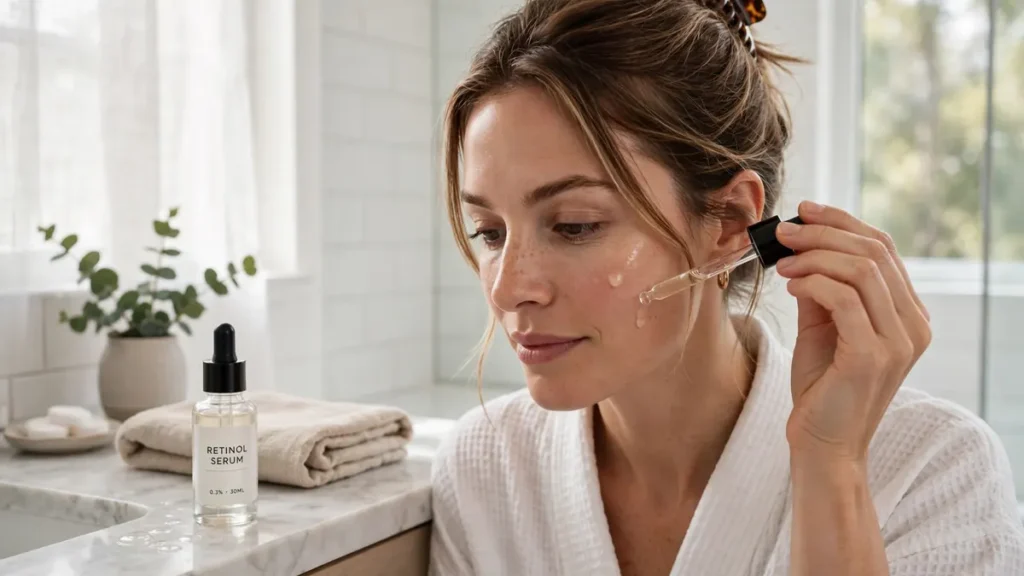
If skincare has one ingredient that truly lives up to the hype, it is retinol. Dermatologists recommend it, and the research behind it is among the strongest in all of skincare. It smooths fine lines, fades dark spots, unclogs pores, and delivers that lit-from-within glow.
But retinol also has a reputation for redness, peeling, and flaking — and for beginners, that first tube can feel intimidating. Here is the good news: most retinol irritation comes from starting too fast, not from the ingredient itself. With the right approach, you can get the benefits with barely any discomfort. This guide shows you exactly how.
What Is Retinol, Exactly?
Retinol is a form of vitamin A belonging to a family of compounds called retinoids. After you apply it, skin enzymes convert it into retinoic acid — the active form that signals your skin cells. That conversion step is what makes retinol gentler than prescription retinoids like tretinoin, which arrive ready to work and tend to cause more irritation.
Once converted, retinoic acid speeds up cell turnover, helping skin shed dull cells faster and produce fresh ones. It also stimulates collagen production in the deeper layers, which is why retinol is considered the gold standard for anti-aging. For more background, see WebMD’s guide to retinoid treatments, which covers the different types and strengths.
Over-the-counter retinol usually ranges from 0.1% to 1%. As a beginner, start at the lowest end — around 0.1% to 0.3% — and only move up once your skin has fully adjusted.
The Benefits of Retinol
Retinol is popular because it tackles several concerns at once:
- Softer fine lines and wrinkles: Boosted collagen gradually smooths crow’s feet, forehead lines, and smile lines.
- More even tone: It fades sun spots and post-acne marks by regulating pigment production.
- Clearer pores: Faster cell turnover keeps dead skin from clogging pores, reducing blackheads and breakouts.
- Better texture: Skin feels smoother as rough, uneven patches give way to fresh cells.
- Firmer skin: Months of use build collagen, giving skin a plumper, more resilient feel.
Expect subtle changes around 8 to 12 weeks, with the biggest improvements between 6 and 12 months. Retinol is a long game — consistency beats intensity every time.
How to Start Retinol Without Irritation
This is the part that matters most. Follow these steps and you will sharply reduce your odds of redness, peeling, or “retinol burn.”
1. Start Low, Use a Pea-Sized Amount
Pick a 0.1% to 0.3% formula — stronger is not better at the start, it just means more irritation. Apply a pea-sized amount for your entire face: dot it across the forehead, cheeks, chin, and nose, then spread thin. More product will not speed up results.
2. Try the Sandwich Method
This beginner-friendly technique buffers the retinol:
- Cleanse and pat your face completely dry (retinol on damp skin absorbs faster — and irritates more).
- Apply a thin layer of gentle, fragrance-free moisturizer.
- Wait a few minutes, then apply your pea-sized amount of retinol.
- Seal with another thin layer of moisturizer.
Once your skin is comfortable after several weeks, you can try applying retinol directly to dry skin before moisturizer.
3. Ramp Up Frequency Slowly
Do not go nightly right away. Follow this schedule:
- Weeks 1–2: Once or twice a week.
- Weeks 3–4: Twice a week if skin feels calm.
- Weeks 5–8: Every other night.
- After 2–3 months: Nightly, if tolerated without dryness or stinging.
If skin gets red or flaky at any point, drop back a step. There is no prize for rushing.
4. Night Use Only
Retinol breaks down in sunlight and increases UV sensitivity, so it belongs in your evening routine only. Make it part of a calm and healthy evening routine after cleansing, and keep mornings focused on hydration and protection.
5. Wear Sunscreen Every Morning
This is non-negotiable. Retinol exposes fresher, more vulnerable skin, so daily sunscreen protects your progress and prevents new dark spots. Use broad-spectrum SPF 30 or higher every morning, rain or shine. The Cleveland Clinic’s overview of retinol is another trustworthy resource on how the ingredient works.
Common Mistakes to Avoid
- Mixing with strong actives: Avoid layering retinol with AHAs, BHAs, benzoyl peroxide, or high-strength vitamin C at first — alternate nights instead.
- Skipping moisturizer: Buffering and barrier support prevent most early side effects, even for oily skin.
- Using too much: The pea-sized rule exists for a reason; a thick layer only adds irritation.
- Expecting overnight results: Mild purging in the first weeks is normal. Give it 8 to 12 weeks before judging.
- Waxing or harsh treatments: Skip facial waxing, strong peels, and abrasive scrubs while your skin adjusts.
Who Should Avoid Retinol (For Now)
Retinol is not for everyone. Skip it or talk to a dermatologist first if:
- You are pregnant, trying to conceive, or breastfeeding. Most doctors advise avoiding all retinoids during pregnancy out of caution.
- You have eczema, rosacea, or a damaged barrier. Retinol can worsen these — heal your skin first.
- You have a sunburn or open wounds. Wait until fully healed.
- You are heading into heavy sun exposure. Do not start right before a beach vacation.
Teenagers with acne can benefit from retinoids, but a dermatologist should guide the product and strength.
Conclusion
Retinol earned its reputation honestly — few ingredients have this much evidence behind them. And you do not need to suffer for results. Start low, use a pea-sized amount, try the sandwich method, ramp up slowly, apply at night only, and wear sunscreen every morning. Pair your routine with healthy habits like good sleep and gentle hair care, such as these proven methods for stronger, healthier hair — great skin is a whole-body project. For a glowing morning routine to pair with your evening retinol, try our Korean glass skin routine.
FAQs
How long does retinol take to work?
Most beginners notice smoother texture within 8 to 12 weeks. Significant improvements in fine lines and dark spots typically take 6 to 12 months of consistent use.
Can I use retinol every night as a beginner?
No — start once or twice a week and build up over 2 to 3 months. Jumping straight to nightly use is the most common cause of irritation and early quitting.
What is the sandwich method?
Layer moisturizer, then retinol, then moisturizer again. The moisturizer buffers absorption, making retinol much gentler while still letting it work.
Morning or night?
Night only. Retinol degrades in sunlight and increases sun sensitivity — apply it in the evening and wear SPF 30+ every morning.
Can sensitive skin use retinol?
Yes, cautiously. Choose 0.1%, always use the sandwich method, start once a week, and keep the rest of your routine simple and fragrance-free. See a dermatologist if irritation persists.