
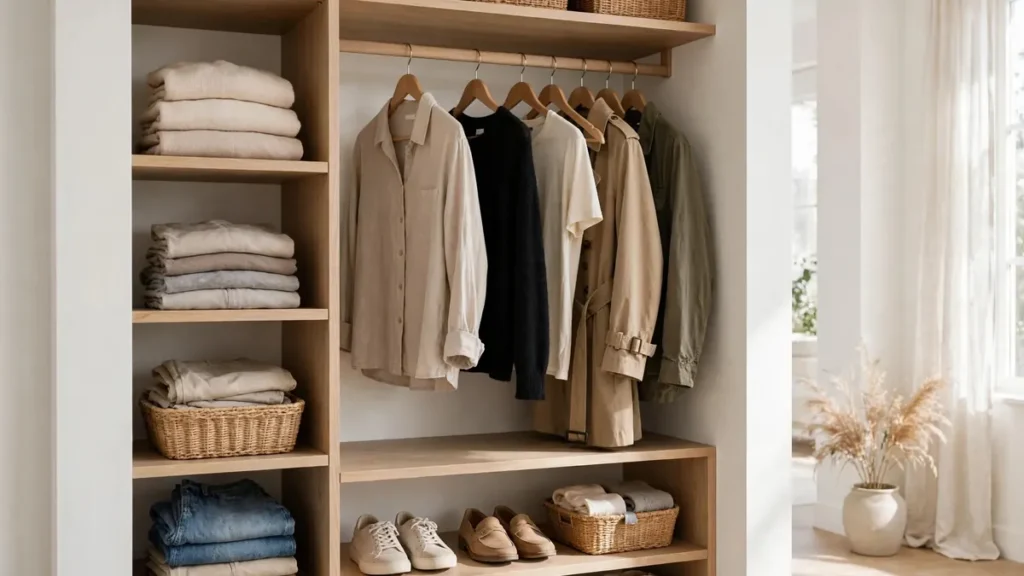
Staring at a closet full of clothes and still feeling like you have nothing to wear is a frustration almost everyone knows. The answer is not more shopping — it is smarter owning. Learning how to build a capsule wardrobe means curating a small collection of versatile, high-quality pieces that mix and match effortlessly, so getting dressed becomes the easiest part of your day.
A capsule wardrobe typically holds 25 to 40 pieces (excluding underwear, sleepwear, and workout gear), all chosen to work together. The concept, popularized in the 1970s by London boutique owner Susie Faux and later refined by Donna Karan’s “Seven Easy Pieces” collection, has found new life in the age of minimalist wardrobe thinking. Fewer, better pieces mean less decision fatigue, less waste, and sharper personal style. Here is how to build yours in seven steps.
Step 1: Declutter and Assess Your Closet
Before buying anything new, take everything out of your closet and sort each piece into four piles: love and wear often, maybe, donate or sell, and toss.
Be honest. If you have not worn something in a year, it does not belong in your capsule. Study the “love” pile closely — the colors, fabrics, and silhouettes you reach for repeatedly reveal your true preferences and form the foundation of your future wardrobe.
Step 2: Define Your Personal Style
A capsule wardrobe only works when it reflects your life. Ask yourself: What does a typical week look like? Which outfits make you feel confident? Are you classic, edgy, romantic, sporty — or a blend?
Write down three words describing how you want to dress (for example: “polished, relaxed, timeless”). Every future purchase should match at least two of them. If you lean toward understated elegance, our piece on quiet luxury fashion shows how timeless, logo-free dressing fits a capsule approach perfectly.
Step 3: Choose a Cohesive Color Palette
The secret to a wardrobe where everything matches is a disciplined palette:
- 2–3 neutrals as your base: black, white, navy, grey, beige, or camel.
- 2–3 accent colors you love: olive, burgundy, rust, or soft blue.
- 1–2 patterns at most, since patterns are harder to mix.
Use the five-second rule before buying: hold the item next to three pieces already in your capsule. If it clashes with two of them, put it back. This prevents “orphan pieces” that match nothing and never get worn.
Step 4: Identify Your Capsule Wardrobe Essentials
Now list your capsule wardrobe essentials — roughly 30 pieces adjusted to your climate and lifestyle:
Tops (8–10): white tee, black tee, striped top, white button-down, blouse, light knit, chunky sweater, layering camisole. Bottoms (5–6): dark jeans, black trousers, chinos, plus shorts or a midi skirt. Dresses (2–3): a little black dress and a neutral day dress. Outerwear (3–4): trench coat, denim jacket, tailored blazer, wool coat. Shoes (4–5): white sneakers, ankle boots, loafers, dressy flats, sandals. Accessories (3–4): everyday tote, crossbody bag, silk scarf, belt.
Treat this as a template, not a rulebook — a warm-climate capsule needs fewer coats and more breathable layers.
Step 5: Shop Intentionally to Fill the Gaps
Compare your essentials list with what survived the declutter. The difference is your shopping list — probably shorter than you expect. Then follow these rules: choose quality over quantity, apply the “30 wears” test before buying, shop your own closet first, and buy slowly — two or three pieces a month keeps it enjoyable and budget-friendly.
Staying aware of current trends helps you pick accent pieces that feel fresh without dating your capsule. A glance at the latest fashion trends shows which timeless pieces are getting modern updates.
Step 6: Mix, Match, and Test Your Outfits
Spend an afternoon playing stylist: photograph combinations you like and save them in a phone album as your personal lookbook for busy mornings. Each piece should generate two to three outfits — try white shirt + dark jeans + loafers for polished casual, or black dress + blazer + boots for evening.
For more mix-and-match ideas, see this casual capsule wardrobe inspiration. Men can adapt the same principles too — our guide to smart casual outfits for men shows how a few versatile pieces cover office days to dinners out.
Step 7: Maintain and Refresh Each Season
Each season, do a mini-audit: remove what no longer fits or flatters, note what you wished you had, and store off-season pieces properly. Most capsules need only a 20–30% seasonal swap — lighter layers for spring, warmer knits for autumn. Between refreshes, these everyday fashion tips keep a small wardrobe looking intentional rather than repetitive.
Frequently Asked Questions
How many pieces should a capsule wardrobe have?
Most people land between 25 and 40 pieces, excluding underwear, sleepwear, activewear, and occasion-specific gear. Start at the higher end if it feels restrictive — you can edit down once you see what you actually wear.
How much does it cost to build one?
Less than impulse shopping, usually. You already own many essentials, so most people invest gradually — perhaps $50 to $200 a month on one or two quality pieces.
Can it include colors and patterns?
Absolutely — the “all beige” stereotype is a myth. Two or three accent colors and one or two patterns work beautifully, as long as everything coordinates.
How often should I update it?
Do a light review each season and a deeper audit twice a year. Replace worn-out staples as needed, but avoid trend-driven overhauls — longevity is the whole point.
Does it work for men too?
Yes. The same steps apply: declutter, define style, choose a palette, list essentials, and shop intentionally — centered on well-fitting jeans, chinos, plain tees, button-downs, a blazer, and versatile shoes.
Conclusion
Building a capsule wardrobe is about developing a thoughtful relationship with your clothes: declutter honestly, define the style that feels like you, commit to a cohesive palette, and invest slowly in pieces you will reach for again and again. The reward is a closet where everything works together and mornings are effortless. Start this weekend with Step 1 — pull everything out, sort with intention, and take the first real step toward a wardrobe that works as hard as you do.