
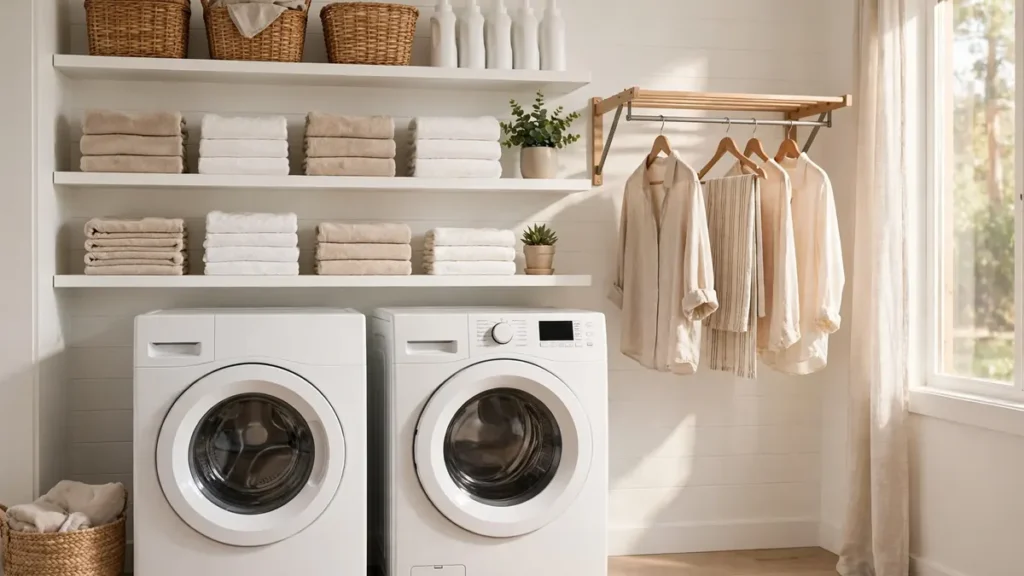
A laundry room is one of the hardest-working rooms in the house, yet it is usually the last one to get organized. Bottles crowd the top of the washer, clean clothes sit in baskets for days, and the “lost sock” pile keeps growing. The good news is that even a tiny laundry corner can be turned into a tidy, functional space with a few smart changes.
Answer: What Are the Best Laundry Room Organization Ideas?
The best laundry room organization ideas are: install shelves or cabinets directly above the washer and dryer for detergents, set up a three-bin sorting station for lights, darks and delicates, use a slim rolling cart in the gap between machines, add a wall-mounted drying rack for air-dry items, and label every bin and basket so the whole household can keep the system running.
Key Takeaways
- Start by clearing everything out, then group items by task: wash, dry, fold, and stain treatment.
- Vertical storage above the machines is the highest-value upgrade in any laundry room.
- A simple three-bin sorting system (lights, darks, delicates) prevents most laundry mistakes.
- Slim rolling carts of 6 to 8 inches fit the dead space between the washer and dryer.
- Renter-friendly options like freestanding shelves, tension rods and over-door organizers need no drilling.
- A 10-minute weekly reset keeps the system working long after the initial overhaul.
Where Should You Start Organizing a Laundry Room?
Start with a full clear-out. Take every bottle, basket and stray item out of the room, wipe the surfaces, and sort what you own into four groups: everyday detergents, stain treatments, tools (lint rollers, mesh bags, drying racks) and things to donate or throw away. Most households find half-empty duplicate bottles hiding behind the machines.
Once the space is empty, plan it as a workflow, not a storage room. Laundry moves through four stages: sort, wash, dry, fold. Everything you add back should serve one of those stages. This room-by-room home organization method works especially well in small utility spaces because it forces every item to earn its place.
What Storage Works Best Above the Washer and Dryer?
The wall space above the machines is the most valuable real estate in a laundry room, and it is usually wasted. Two sturdy floating shelves or a single shallow cabinet holds every detergent, softener and stain remover within arm’s reach. Keep the items you use every load on the lower shelf and the occasional-use products up high.
Decanting is the trick that makes open shelving look tidy instead of cluttered. Pour detergent and softener into matching pump bottles, and keep dryer sheets, pods and scent boosters in labeled glass jars or bins. Clear containers work best because you can see at a glance when something is running low.
For a deeper look at how to organize your supplies, GoLoadUp’s laundry organization tips cover shelf layouts that fit even the narrowest laundry closets. If you prefer closed storage, a 12-inch-deep wall cabinet keeps bottles dust-free while leaving enough clearance to open the washer lid.
How Do You Organize a Small Laundry Room or Laundry Closet?
Small laundry spaces respond best to three upgrades. First, a slim rolling cart that slides into the gap between the washer and dryer — models 6 to 8 inches wide hold a full set of detergents, dryer sheets and stain sticks in space that was otherwise dead. Second, an over-machine freestanding shelf unit: a steel frame that stands over both machines adds two or three shelves with zero drilling, which renters love.
Third, use the back of the door. An over-door organizer with clear pockets holds clothespins, mesh wash bags, a lint roller and a small sewing kit for button repairs. Magnetic containers stuck to the side of the washer are another zero-footprint option for small metal items like safety pins.
The small-space thinking behind small-bedroom layouts that squeeze more from tight rooms applies directly here: when floor space is gone, go vertical, and make every surface do two jobs.
How Can You Set Up a Laundry Sorting Station?
Sorting is the step most people skip, and it is the step that prevents the most damage. A proper sorting station has three labeled bins: lights, darks and delicates. Stackable bins or a triple-sorter hamper fit neatly beside the machines; in a laundry closet, hang three labeled tote bags on hooks instead.
Add a small “stain station” next to the sorter: a spray bottle of stain remover, a soft brush and a mesh bag for delicates, all in one caddy. Treating stains before they hit the wash — rather than discovering them after the dryer has set them permanently — is the single habit that saves the most clothing.
The same pull-out organizers that pull-out kitchen organizers use in kitchens work beautifully here: a narrow pull-out shelf beside the washer keeps the stain caddy hidden but instantly accessible.
Which Renter-Friendly Laundry Organization Ideas Actually Work?
Renters can get 90 percent of the benefit without drilling a single hole. Freestanding over-machine shelving, tension rods wedged between two walls for hanging drip-dry clothes, adhesive hooks inside cabinet doors for the ironing board, and a foldable drying rack that tucks behind the machines when not in use.
Wall-mounted retractable drying racks deserve a special mention: they fold completely flat against the wall and extend to hold a full load of air-dry items, which matters because heat-drying everything is what wears clothes out fastest. A roundup of more laundry room organization strategies includes clever between-machine ideas like magnetic strips on the machine sides for lint brushes and spot-cleaning tools.
Command-style strips and heavy-duty adhesive hooks hold up a surprising amount of weight on smooth laundry room walls — enough for a hanging ironing board cover or a small basket of supplies.
How Do You Keep a Laundry Room Tidy Long Term?
Organization fails when the system needs more effort than the mess it replaces. Keep the maintenance trivial: one labeled bin per household member for clean clothes that need to be put away, a small trash can for lint and clothing tags, and a “lost sock” jar that you empty once a month.
Do a 10-minute reset every Sunday: wipe the machine tops, return stray items to their labeled spots, and check detergent levels. That tiny weekly habit is what separates a laundry room that stays organized from one that drifts back to chaos within a month.
A few finishing touches make the room somewhere you don’t mind spending time: a washable runner rug, a framed print, and one hardy plant. If you’re new to houseplants, these indoor plants that thrive in small apartments include several that handle the humidity of a laundry room perfectly. Most of these upgrades cost very little — see these decorating on a budget ideas for proof that a fresh look doesn’t need a renovation budget.
FAQs
How do I organize a laundry room with no storage?
Go vertical and freestanding. An over-machine shelf unit, an over-door organizer and a slim rolling cart between the appliances add the equivalent of a full cabinet with no built-in storage and no drilling required.
What is the best way to organize laundry supplies?
Group supplies by task and decant them into matching labeled containers. Keep everyday detergents within arm’s reach of the washer, stain treatments in a portable caddy, and backup stock on a higher shelf or in a separate closet.
How wide should a rolling cart between the washer and dryer be?
Most gaps fit a cart 6 to 8 inches wide. Measure your actual gap before buying, and choose a cart with at least three tiers so detergents, dryer sheets and stain treatments each get their own level.
Should detergent go above or beside the washer?
Above is best for daily-use bottles because it keeps the machine top clear for folding. Beside the washer — on a rolling cart or pull-out shelf — works better for heavy bulk containers that are awkward to lift overhead.
How often should I declutter the laundry room?
Do a quick 10-minute reset weekly and a deeper declutter every three months. Toss expired products, combine duplicate bottles, and rehome anything that migrated in from other rooms.