
Property Investment Norway: Complete Guide for Foreign Investors in 2026
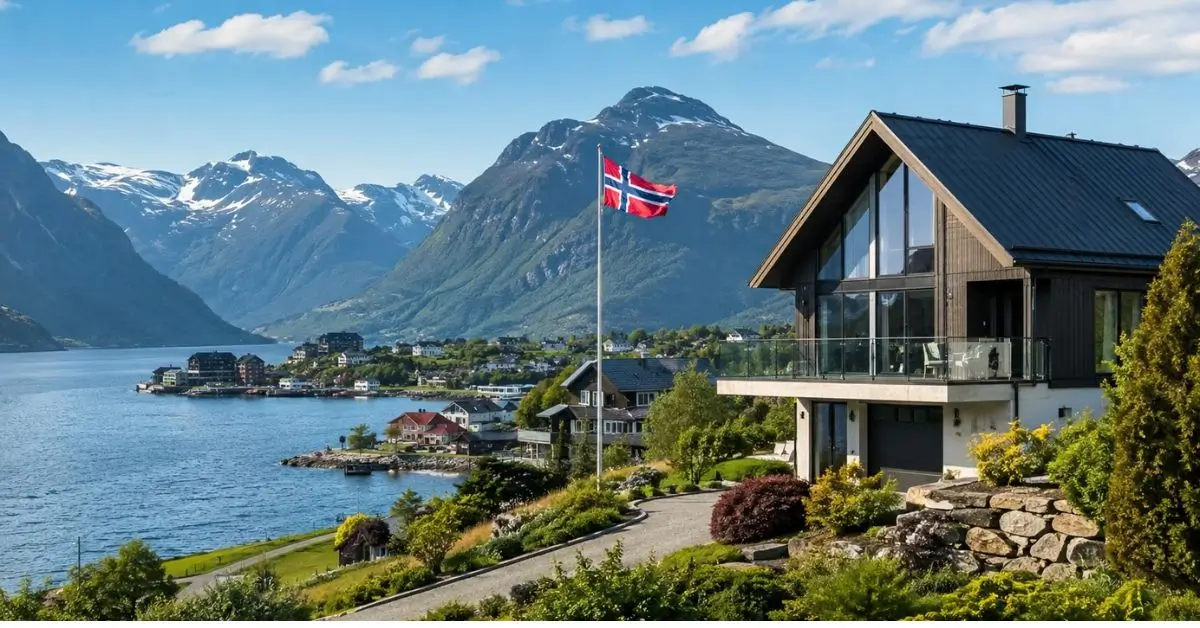
Norway does not make headlines the way Dubai or Lisbon does when people discuss international real estate. Yet for investors who study the fundamentals rather than follow the noise, Norway presents a genuinely compelling case — a stable, transparent economy, strong rental demand in major cities, clearly protected property rights and a housing market that has delivered consistent long-term appreciation across multiple economic cycles.
As of early 2026, foreigners can legally buy most residential property in Norway without needing special government permission, which puts Norway among the more open countries in Europe for foreign property buyers. This openness, combined with Norway’s economic stability, is precisely what attracts serious long-term investors rather than speculative buyers.
This guide covers everything a foreign investor needs to understand about property investment in Norway in 2026 — from current market conditions and city-by-city analysis to legal requirements, tax implications and realistic return expectations.
Why Norway Attracts Serious Property Investors
Norway’s appeal as a property investment destination is rooted in fundamentals that hold up under scrutiny.
The country consistently ranks among the world’s wealthiest nations by GDP per capita. Unemployment is structurally low. The rental market is strong, particularly in major cities where demand from students, young professionals and international workers consistently outstrips available supply. Property rights are clearly defined and legally protected under a transparent regulatory framework that does not change arbitrarily.
Right now there is a real supply crunch, with new construction struggling to keep up with demand. This imbalance means homes are selling incredibly fast — in some high-demand areas, properties are gone in as little as 16 to 19 days. On top of that, demand from renters is also outpacing available supply, which helps boost potential rental yields for both long-term tenants and holiday lets.
For yield-focused investors, this combination of undersupply and strong rental demand creates a durable advantage that is independent of short-term market sentiment.
The Norwegian Property Market in 2026
Current Market Conditions
The Norwegian property market entered 2026 in a position of measured stability. Norges Bank managed a series of interest rate adjustments through 2023 and 2024 that cooled growth from the exceptional post-pandemic period. As of January 2026, foreign buyers were seeing mortgage rates in the 4.6 to 5.3 percent range.
This moderation has created better entry conditions for informed investors. Properties are taking slightly longer to sell, price growth has settled and sellers have become more realistic — precisely the environment that favours buyers who have done thorough preparation over those chasing a rapidly rising market.
The rental market has not cooled in the same way. Rental demand across Norwegian cities remains structurally strong, creating the divergence between ownership and rental markets that buy-to-let investors look for.
Property Price Overview by City
Five years ago, an apartment of 100 square metres cost an average of 403,000 euros, and today it is sold for 527,000 euros — confirming the long-term appreciation trajectory of the Norwegian market.
Current price ranges across major investment cities:
- Oslo: NOK 60,000 — 100,000 per square metre depending on location and condition
- Bergen: NOK 45,000 — 70,000 per square metre with strong student and tech sector demand
- Trondheim: NOK 40,000 — 60,000 per square metre, supported by Norway’s largest university
- Stavanger: Competitive pricing driven by a diversified economy beyond the oil sector
Can Foreigners Invest in Norwegian Property?
The straightforward answer is yes — and the process is more accessible than many investors expect.
Norway operates on a principle of equal treatment, meaning the same rules that apply to Norwegian citizens also apply to foreign buyers when purchasing a standard home or apartment. The core regulations are well established and have not changed significantly, with no major shifts on the horizon for 2026.
Practical Requirements for Foreign Buyers
- A Norwegian personal identification number — known as a D-number for non-residents
- Documentation including a valid passport, proof of address and source of funds
- Legal representation through a qualified Norwegian lawyer or registered estate agent
- A standard purchase contract reviewed by qualified legal counsel
Foreign buyers usually need to present a valid passport, proof of address, source of funds documentation, and in some cases a power of attorney if they cannot be physically present at signing.
The Concession Act — What It Actually Means
You might have heard about something called the Concession Act, or konsesjonsloven, and worried it is a major roadblock. In reality, for the vast majority of buyers looking at a city apartment, a house in the suburbs or even a holiday cabin, this act simply does not apply.
The concession rules primarily affect agricultural land and certain rural properties — not standard urban investment properties.
Important Warning About Rural Properties
The single most risky grey zone is buying a charming farmhouse or smallholding without realising that a family member of the seller may have odel rights to claim the property at the sale price, or that you may be legally required to live there full-time. The best precaution is to hire a Norwegian lawyer or use a regulated real estate agent who can verify before you bid whether the property triggers any concession requirements, residency obligations or model risks.
Financing Property Investment in Norway
As of early 2026, Norwegian banks do lend to foreigners for home purchases, though approval is easier for those with Norwegian income or residence than for non-residents with foreign income only. Foreign borrowers in Norway typically see loan-to-value ratios of 60 to 75 percent.
This means foreign investors typically need to bring 25 to 40 percent of the purchase price as a deposit — a meaningful capital requirement that filters out undercapitalised buyers and contributes to the market’s overall stability.
Norway does not impose any minimum investment amount or purchase price threshold for foreigners buying residential property, so you can buy whatever you can afford without meeting a government-mandated minimum.
Understanding Property Tax in Norway for Investors
Tax planning is an essential component of any Norwegian investment strategy.
Buying Costs
The single biggest one-time cost you will face is stamp duty, known locally as dokumentavgift — a government tax set at 2.5 percent of the property’s market value when the title is transferred. Associated costs range between 2.5 and 5.6 percent of the purchase agreement value overall.
Ongoing Tax Obligations
Property owners pay an annual municipal tax of 0.2 to 0.7 percent of the cadastral value, with the rate depending on the region. In addition, owners pay a wealth tax at 0.85 percent of the market property value if it exceeds the applicable threshold.
Rental Income Tax
Rental income earned in Norway is subject to Norwegian income tax at 22 percent regardless of the investor’s country of residence. Norway’s extensive tax treaty network governs how this income is treated in the investor’s home country — reviewing the applicable treaty before investing is strongly recommended.
Capital Gains Tax
Gains realised on the sale of Norwegian property are taxable in Norway at 22 percent. Primary residence exemptions exist but typically do not apply to buy-to-let investment properties.
Realistic Rental Yields in Norwegian Cities
Rental yields are low to moderate, averaging 4.92 percent in Q2 2025, while rental markets are active in many cities.
Gross rental yields across major Norwegian cities typically range from 3.5 to 5.5 percent depending on location, property type and management approach. Net yields — after management costs, maintenance, taxes and vacancy allowances — are generally 1.5 to 2 percentage points below gross figures.
The total return case for Norwegian property combines rental yield with capital appreciation. It is this combination — rather than yield in isolation — that has historically made Norwegian property a sound long-term investment for patient investors.
Best Cities for Property Investment in Norway
Oslo
Oslo remains the most liquid market with the strongest long-term appreciation track record. Central districts — Frogner, St. Hanshaugen and Grünerløkka — offer quality stock with strong rental demand from young professionals and international workers. For better yields at lower price points, eastern districts and well-connected suburbs offer more accessible entry levels.
Bergen
Bergen’s combination of a strong student population, growing technology sector and active tourism economy creates diversified rental demand. Areas closest to the university and city centre command the strongest occupancy from student and professional tenants.
Trondheim
For yield-focused investors, Trondheim’s student market creates some of the most consistent rental demand in Norway. Properties within walking or cycling distance of NTNU — Norway’s largest university — maintain strong occupancy throughout the academic year with relatively low vacancy risk.
Stavanger
Stavanger’s economy has diversified meaningfully beyond its oil and gas origins. The city’s international workforce creates demand for quality rental properties across a range of price points.
The Step-by-Step Buying Process in Norway
Understanding the Norwegian purchase process removes uncertainty and helps investors prepare effectively.
- Obtain a D-number — Apply through the Norwegian Tax Administration before beginning your property search
- Engage a Norwegian lawyer or estate agent — Essential for verifying property status and managing the transaction
- Research and view properties — Properties are listed publicly on finn.no, Norway’s primary property portal
- Submit a bid — Norwegian property purchases proceed through a binding bid process with a tight timeline
- Complete due diligence — Verify the property’s legal status, any outstanding debt and relevant restrictions
- Sign the purchase agreement — The contract is legally binding once signed by both parties
- Complete the transfer — Title is registered through Kartverket, Norway’s land registry
Frequently Asked Questions
Q: Can foreigners buy property in Norway without restrictions?
Yes. Norway operates on a principle of equal treatment, meaning the same rules that apply to Norwegian citizens also apply to foreign buyers when purchasing a standard home or apartment. Specific rules around agricultural land and rural properties with concession requirements are the main exceptions.
Q: What is the average rental yield for investment property in Norway?
Rental yields average approximately 4.92 percent, while rental markets remain active in major cities. Net yields after costs are typically 1.5 to 2 percentage points lower than gross figures.
Q: Do I need to live in Norway to own investment property there?
No. Non-residents can purchase, own and rent out investment property in Norway. You will need a D-number and appropriate documentation but physical residence is not required for standard residential investment properties.
Q: How much deposit do I need as a foreign buyer?
Foreign borrowers in Norway typically see loan-to-value ratios of 60 to 75 percent, meaning a deposit of 25 to 40 percent of the purchase price is typically required.
Q: Does buying property in Norway give me residency or citizenship?
As of early 2026, buying property in Norway does not help you obtain residency or citizenship because Norway has no golden visa, investor visa or property-based immigration program
Q: Which Norwegian city offers the best investment returns?
Oslo offers the strongest capital appreciation and most liquid market. Bergen and Trondheim offer better yield potential at lower entry price points. The right choice depends on whether your priority is capital growth, rental yield or a balance of both.